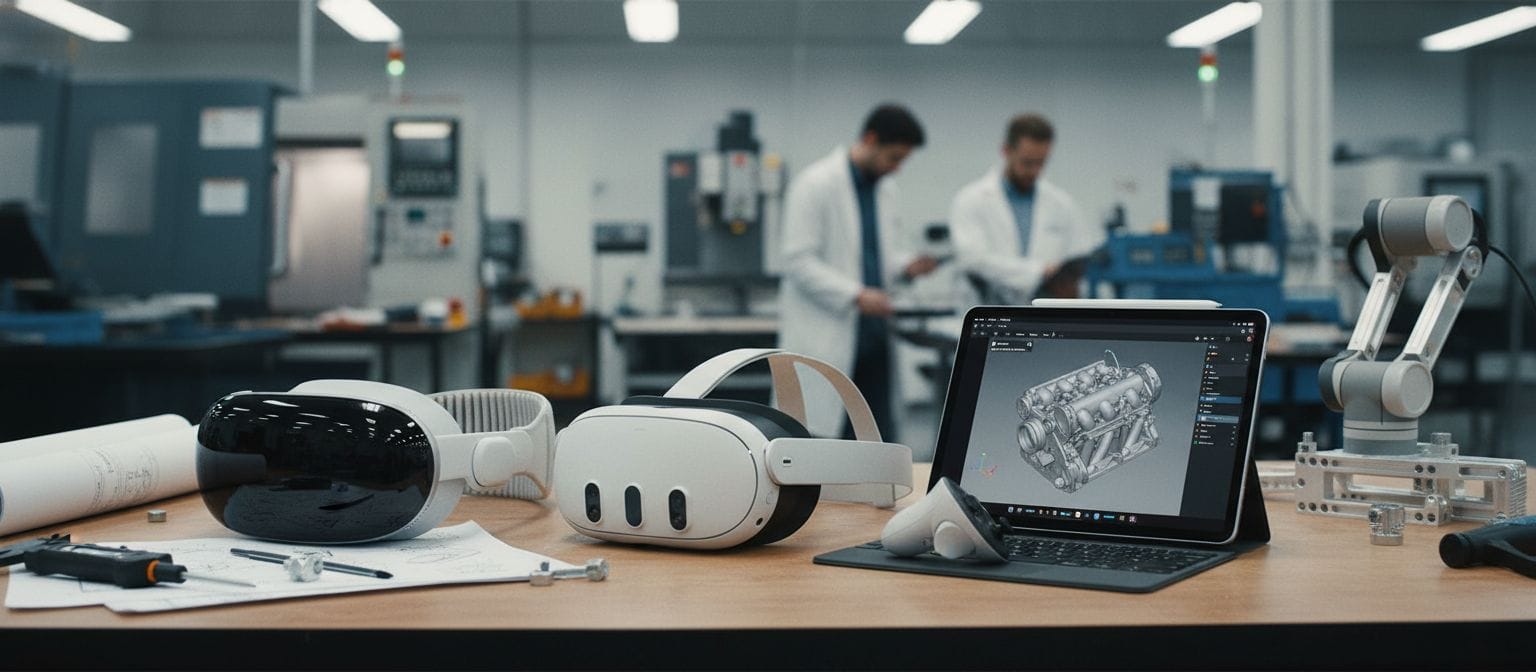

💡 At a glance: The Apple Vision Pro has been available in Germany since July 2024. Price: from €3,999. Vuframe support is in the beta phase.
The Apple Vision Pro is a mixed reality headset. It has been available in Germany since July 2024. For mechanical engineering companies, the question is: is the device suitable for professional product visualization and sales presentations?
⚙️ Technical Specifications
Processors and Performance
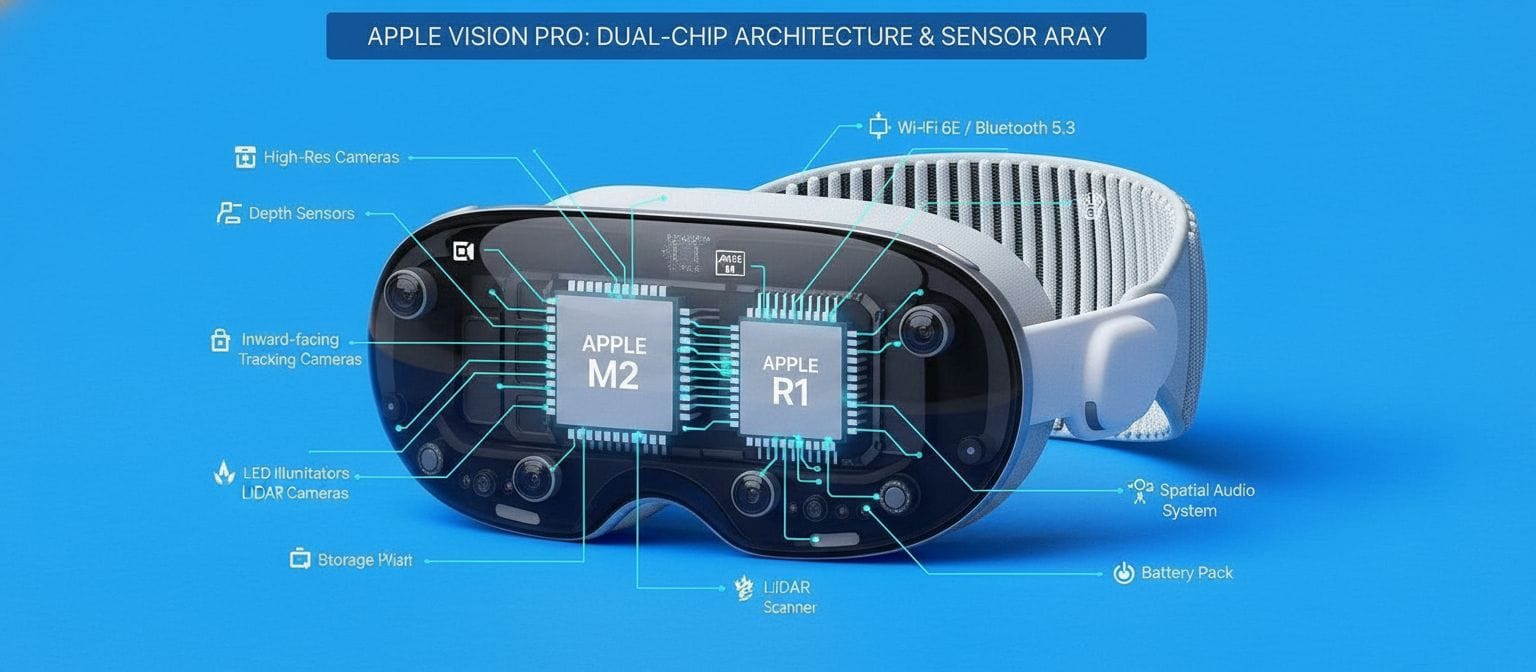
Apple uses a dual-chip architecture:
M2 chip:
- 8-core CPU (4 performance cores, 4 efficiency cores)
- 10-core GPU
- 16-core Neural Engine
- 16 GB unified memory
R1 chip:
- Dedicated coprocessor for sensor processing
- 12 milliseconds photon-to-photon latency
- 256 GB/s memory bandwidth
- Processes input from 12 cameras, 5 sensors and 6 microphones
🔍 Technical note: The dual-chip architecture makes smooth mixed reality experiences possible. The M2 does the rendering and the application logic. The R1 captures the environment in real time.
🖥️ Displays
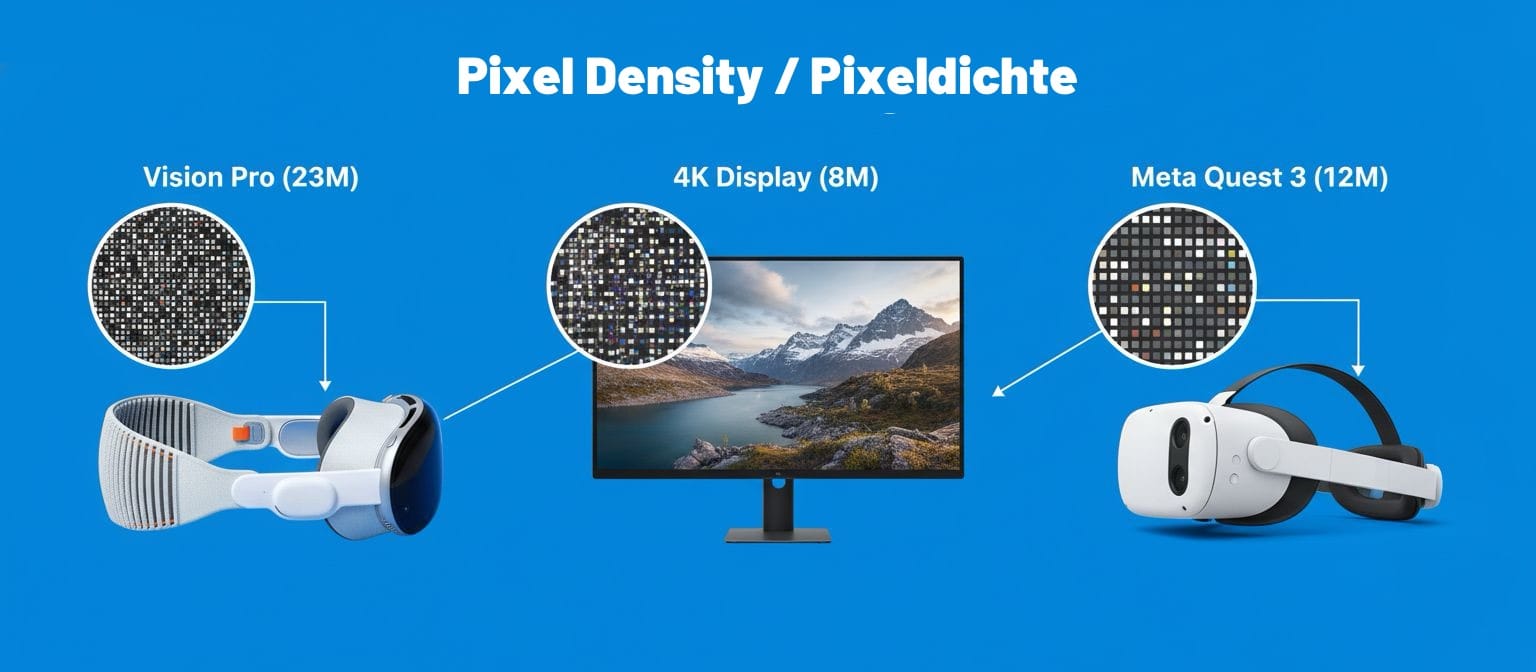
The Vision Pro uses two micro-OLED displays with impressive specifications:
| Specification | Value |
|---|---|
| Total resolution | 23 million pixels |
| Per display | 4096 × 5464 pixels (both lenses) |
| Color accuracy | 92% DCI-P3 color gamut coverage |
| Refresh rate | 90 Hz, 96 Hz, 100 Hz |
| Video playback | 24 fps and 30 fps content |
💡 For comparison: A 4K display has approx. 8 million pixels. The Vision Pro has almost three times the pixel density.
👁️ Tracking and Input
Eye tracking:
- 4 dedicated eye cameras
- High-precision gaze detection
- Makes eye control without controllers possible
Hand tracking:
- 6 world-facing tracking cameras
- Detection of natural hand gestures
- No external controllers necessary
Passthrough cameras:
- 2 high-resolution main cameras
- Color passthrough of the real environment
- LiDAR scanner for spatial mapping
💰 Storage Options and Availability
The Vision Pro is available in three configurations:
| Configuration | Price |
|---|---|
| 256 GB | €3,999 |
| 512 GB | €4,249 |
| 1 TB | €4,499 |
📅 Available since: July 12, 2025, in German Apple Stores and online.
🧰 Accessories
ZEISS Optical Inserts:
- Reader inserts: €115
- Prescription inserts: €169
Other:
- Travel Case: €219
- Spare battery: €219
- Alternative bands: €115 each
- AppleCare+: €549
👓 Important for people who wear glasses: You need the ZEISS inserts, because you cannot wear glasses under the headset.
🔌 Vuframe Compatibility
Status: Beta phase
Vuframe support for the Apple Vision Pro is currently in beta. Customers can get access on request.
In comparison, Meta Quest is fully supported (Quest 2, Quest 3, Quest Pro), with publicly available apps in the Meta Store and App Lab.
⚖️ Practical Considerations
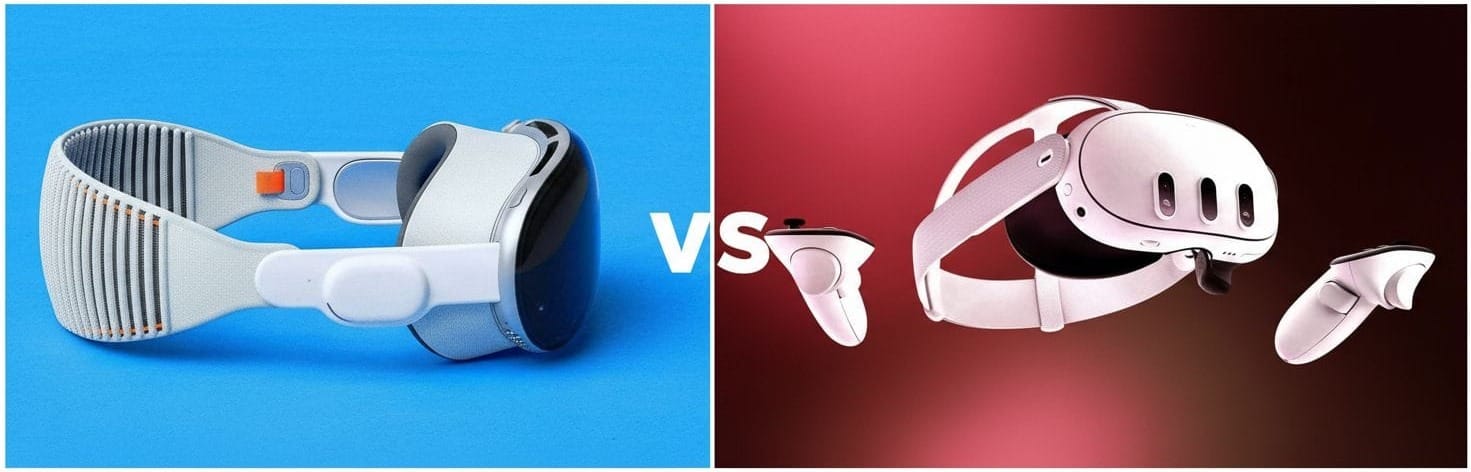
| Aspect | Vision Pro | Meta Quest 3 |
|---|---|---|
| Price | ~€4,000 | ~€550 |
| Display resolution | 23M pixels | ~12M pixels |
| Passthrough | High resolution, color | Standard, color |
| Tracking | Eye + hand | Controller + hand |
| Vuframe support | Beta | Full |
| Battery life | 2–3 h (external) | 2–3 h (integrated) |
| App ecosystem | Limited | Established |
✅ Advantages compared to Meta Quest:
- Much higher display resolution (23M vs. ~12M pixels)
- Higher-quality passthrough (color, higher resolution)
- More precise eye and hand tracking
- Premium impression in customer presentations
⚠️ Disadvantages compared to Meta Quest:
- 8x higher price (approx. €4,000 vs. €550)
- Limited software availability (beta status at Vuframe)
- 2–3 hours battery life (external battery pack necessary)
- Limited app ecosystem compared to Meta
🎯 Use Scenarios in a B2B Context
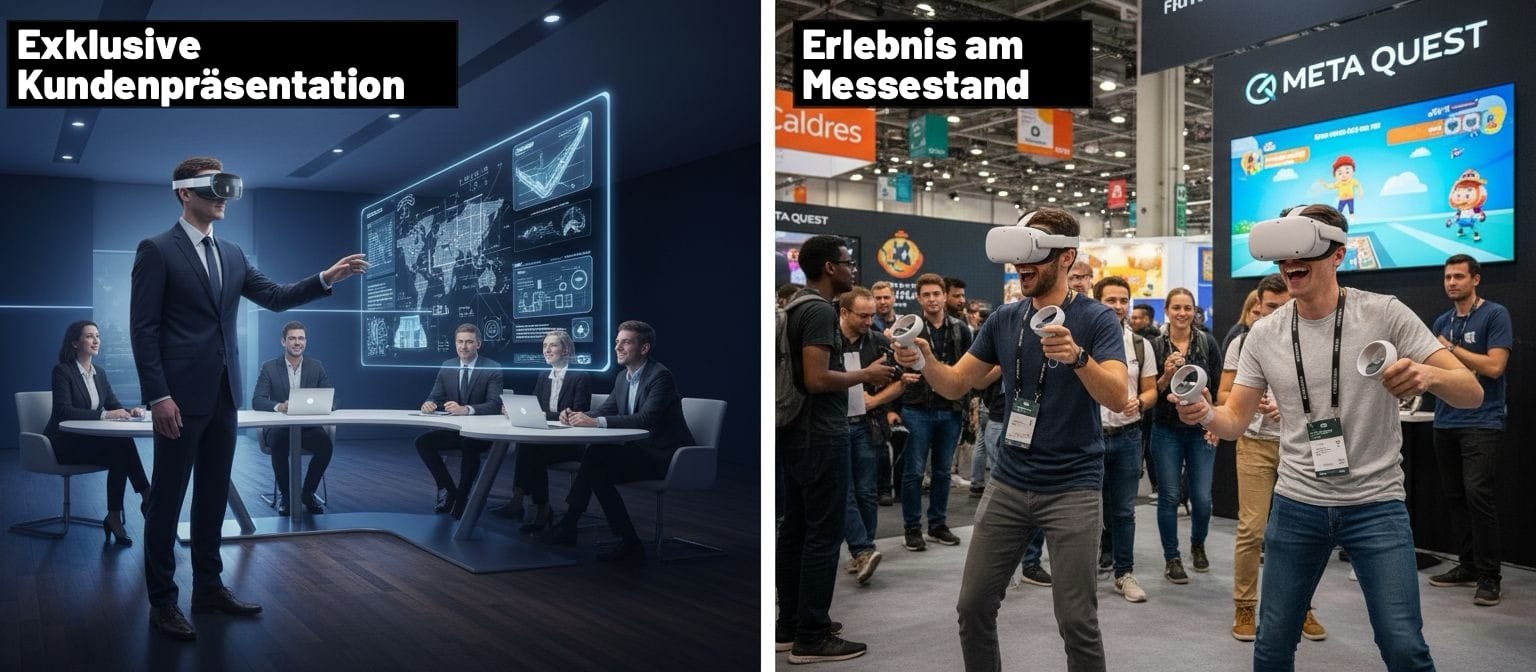
✅ Suitable for:
High-end customer presentations:
When you present machines in the premium segment (> €1 million) and the presentation quality must match the product positioning.
Exclusive sales situations:
Private presentations for selected key accounts, where one device per use case is sufficient.
Technology showcases:
Companies that want to position themselves as innovation leaders.
⛔ Less suitable for:
Trade show booths with many visitors:
The cost per device and the hygiene requirements (face contact) make the use of several devices impractical.
Technical training:
Meta Quest gives comparable functions at much lower costs when you need several devices.
Self-service stations:
Touch displays or iPads with AR functions are better for simple interactions.
📷 COMPARISON SECTION
🔄 Alternatives for Mechanical Engineering Applications
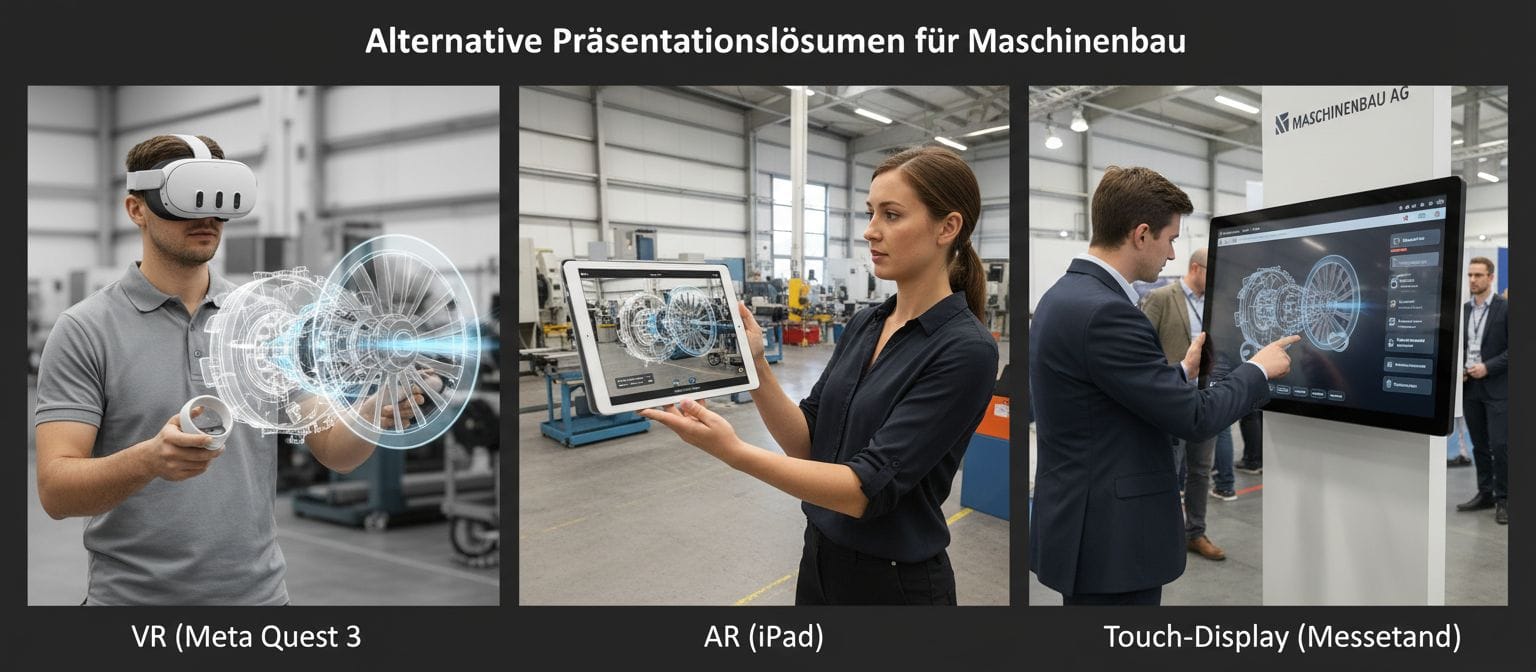
Meta Quest 3 (€550)
- ✅ Fully supported by Vuframe
- ✅ Sufficient resolution for technical visualizations
- ✅ Proven platform with a large app ecosystem
- ✅ Suitable for several users at the same time at the trade show booth
iPads with AR (from €900)
- ✅ Established solution for AR product presentation
- ✅ No hygiene requirements as with headsets
- ✅ Easy to use without instruction
- ✅ Integration with Apple TV for big-screen presentations
Touch displays (from €2,500)
- ✅ No barrier for visitors
- ✅ Several users at the same time
- ✅ High attention at the trade show booth
- ✅ Proven medium for self-explanatory interaction
→ Hardware guide for trade shows
"For 90% of our customers, Meta Quest is the better choice: fully supported, an established ecosystem and 8x less expensive. The Vision Pro makes sense only when premium positioning and exclusive customer presentations are the priority."
— Andreas Zeitler, Product Manager at Vuframe®
🎬 Conclusion: When Is the Vision Pro Worth It?
The Apple Vision Pro is technically impressive, but it is more than most mechanical engineering applications need. High costs, the beta status of the Vuframe integration and practical limitations make the device a niche solution at the moment.
💡 Our Recommendation:
For standard use cases (trade shows, sales presentations, technical training), the Meta Quest 3 or iPad-based AR solutions give better value for money with full Vuframe support.
The Vision Pro can make sense when premium positioning matches the product and you have a budget for exclusive customer experiences. In this case, contact Vuframe for beta access and evaluate a pilot project.
Review of the Apple Vision Pro by tech expert Marques Brownlee
Which hardware matches your use case?
Not sure if the Vision Pro, the Meta Quest or touch displays meet your requirements?
We analyze your specific requirements and recommend the right solution.